
How I stopped meal planning becoming overwhelming
Most meal planning advice is written for people who want more variety. New recipes to try, colourful weekly plans, batch cooking at the weekend, or even following a new diet trend. It assumes food is a project you have energy for.
Here’s my honest starting point: I don’t like cooking. When my food intolerances were at their worst, I had small children, a job, and symptoms that affected me on a daily basis. Organising and preparing meals, being creative about what I’d cook was a necessity. The effort I had to put in to eat properly and to ensure I would feel as well as I could at that time was all I could muster up and not a scrap more.
So I did something that sounds bland and boring to some people. I locked down breakfast and lunch completely and ate more or less the same things week after week. Total routine, total safety, two meals I didn’t have to think about. It definitely wasn’t about meals being exciting or even particularly tasty. It was about being fed, safely, with the least effort possible.
Breakfast on autopilot
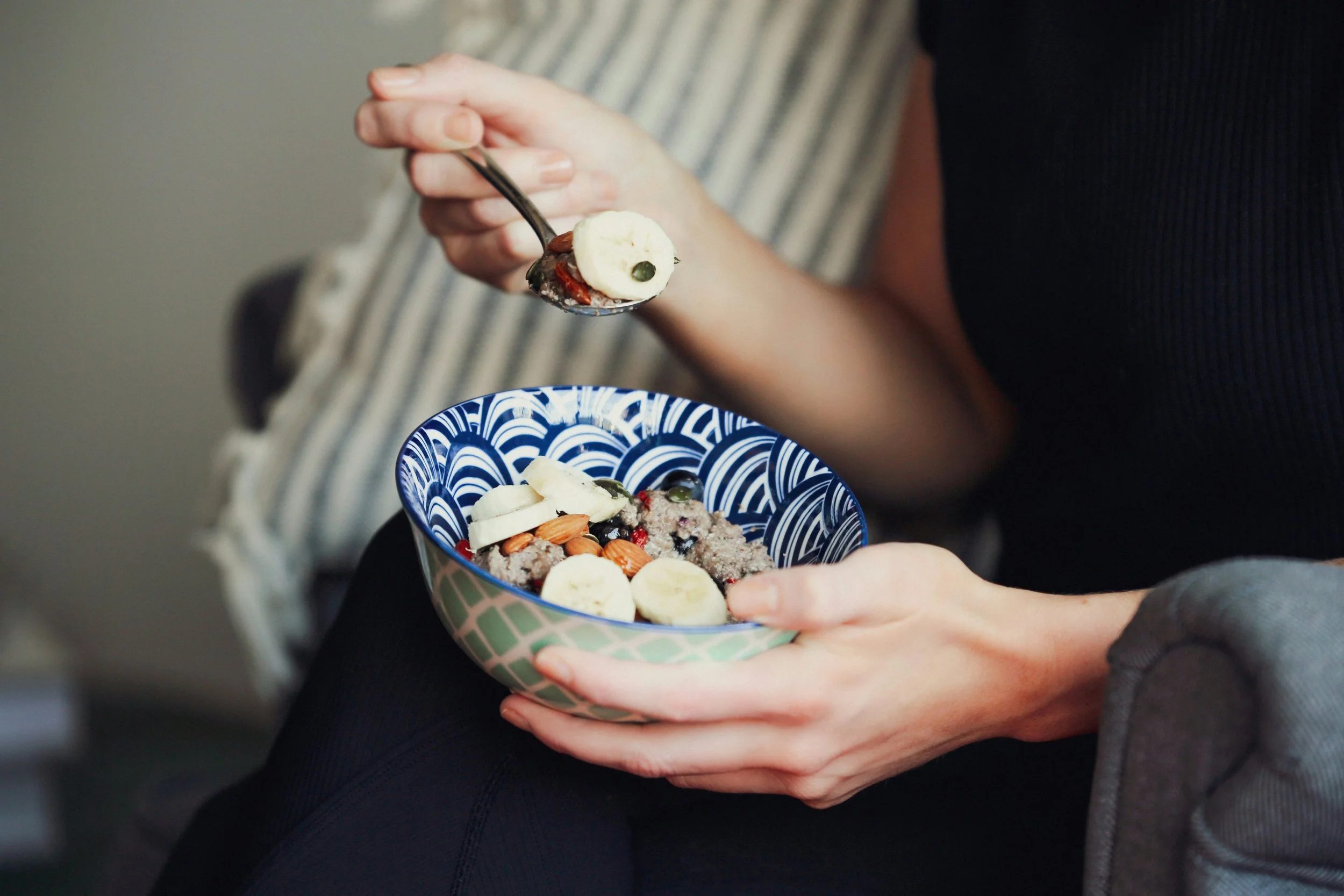
Breakfast was porridge, made with almond or oat milk. When I was at my most restricted there wasn’t much choice anyway, so the decision had largely been made for me. Apples, walnuts, and dates were on my safe list, so I’d add them to the porridge for taste and nutrition, but that was about the extent of the variety. As a treat, I’d make sweet potato hash brownies - usually at the weekend when I had more time in the mornings.
I should say that this broke a rule. The advice I’d been given was to rotate foods, so that I’d be less likely to develop sensitivities to some of my safe items. I understood the reasoning but it was too much effort given the limited foods I had anyway and time constraints. The occasional swap was my compromise. When your capacity is already full, a routine you can rely on keeps you sane, and that was a conscious trade I made.
Lunch followed the same logic
I was in the office three days a week, so I made sure lunch came with me. Homemade soup, gluten free pasta, things I could heat up at work.
I honestly can’t remember every lunch from that time, and I think that says something in itself. They weren’t memorable enough to stick with me. They were safe and repeatable, which was exactly what I needed from them. What I ate at home probably didn’t differ much, it just needed less preparation.
Today, I sometimes buy at work and sometimes I prepare lunch at home, or I bring in ready made soup with gluten free crackers.
The evening meal was different
Back when I was struggling with my health, dinner was the meal I shared with my family, which meant it had to work for more people than just me. Their tastes and their needs were important, and that made it the one meal that couldn’t run on autopilot. That’s a subject for a separate article. The point here is that locking down breakfast and lunch is what made the evening meal more manageable. All the thinking capacity and energy I saved for my solo meals gave me enough energy for the meal that needed it. I started planning all meals once per week so that I didn’t end up feeling overwhelmed several times a week - something I maintain to this day.
What the routine gave me
From the outside it probably looked restrictive, even a bit sad. It didn’t feel that way, it meant reduced risk and worrying about flare ups. At least for breakfast and lunch, I was in control of my own food plan and I could make it as safe as I needed to.
When you don’t like cooking, when you’re unwell more often than not, and when children and a job have already claimed most of what you’ve got, safe and automatic beats varied and exhausting every time. You’re already carrying the mental load of food sensitivities everywhere else. The routine wasn’t the price I paid. It was the thing that made the rest of the week possible.
It helped that the routine was built on foods I trusted. That’s a separate piece of work, and if you haven’t done it yet, building a safe foods list is where this starts. The plan only removes decisions if the foods in it are ones you don’t have to second-guess.
It loosened over time
The strict version wasn’t something I had to do forever. As my tolerance improved, gluten free sandwiches found their way into the lunch rotation. These days lunch is mostly salads, or soup in winter. I still eat porridge, because I like it, but what goes in it varies far more than it used to.
That’s the part worth knowing if you’re in the strict phase now. The routine is a tool that carried me through the period when every food decision was tough, and it quietly relaxed as things stabilised.
If you want to try it
You don’t need to plan seven days of three meals, and you definitely don’t need to learn to love cooking. Look at which meals could run on routine and which ones genuinely can’t, and put your effort only where it’s needed. For me that was two meals locked down and one left flexible. Your split might be different, but the principle is the same: the goal isn’t an impressive plan, it’s fewer decisions with the energy you actually have.
The Weekly Meal Planner in the Food Sensitivities Support System is built for exactly this, planning the week without it becoming another job. You can find out more here: https://www.nurtureandthrive.live/food-sensitivities-support-system
Or start with my free Food Sensitivities Starter Guide: https://www.nurtureandthrive.live/free-resources
About the Author
Nurture & Thrive is written from lived experience of managing multiple food sensitivities over more than 15 years. The content reflects personal experience of navigating symptoms, diagnosis, and recovery, and is focused on the practical and emotional realities of living with it day to day.