
What I mean when I say I’m healed

I use the word healed fairly freely when I talk about my experience with food sensitivities, and I think it deserves some explaining, because it does not mean what it might sound like.
It does not mean I eat like someone who has never had food sensitivities. It does not mean my system is robust and forgiving in the way it probably once was, before years of a poor diet and too many courses of antibiotics quietly dismantled what should have been there. When I catch a virus now, I feel the pains throughout my body I used to feel all the time. The fragility is still there and I don’t expect it to completely disappear. Some foods I eat in moderation rather than freely, such as sugar-rich foods, or wheat-based bread and cake.
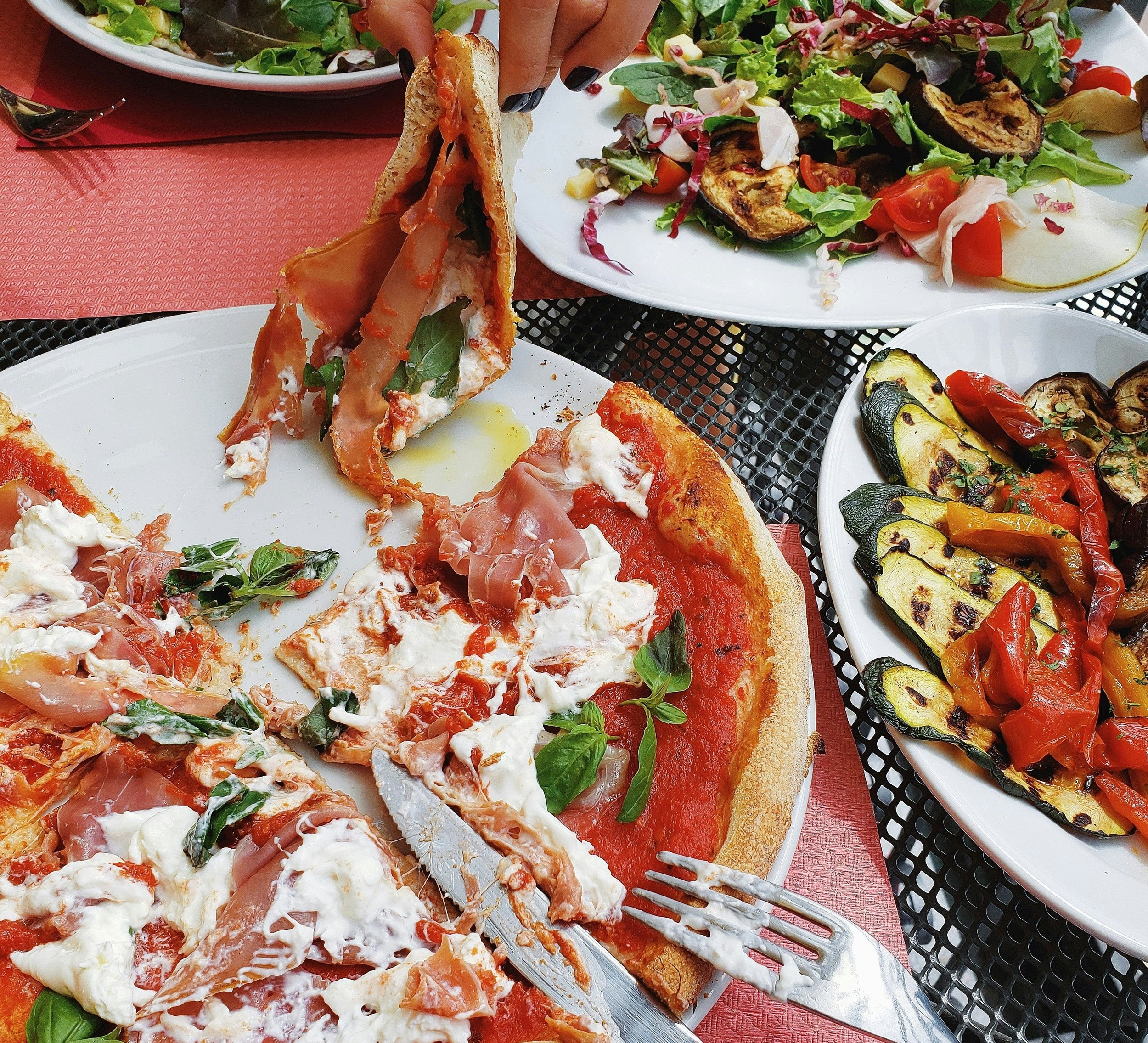
What healed means for me is something more personal than a medical term. It means I came from a place where I was restricted to around forty foods, cooking everything from scratch, and feeling seriously unwell every single day, to a place where I can eat most things. Where I can go to a restaurant without the conversation I used to have to have in my head before I even looked at the menu. Where I went to Italy three years ago and ordered pizza when I wanted to, and sat at the table feeling like myself. That trip meant something specific to me. I had promised myself I would not go until I could eat pretty much anything, because I had already had too many holidays sitting watching everyone else enjoy food while I worked out what I could safely manage. It was the moment I recognised how far I had actually come.
That is what healed means. A journey from a very dark place to one where food can be enjoyable again. It is not a medical diagnosis but how I view myself.
Why my story might not be yours
I want to be straightforward about this, because honesty matters. The reason I was able to improve as significantly as I did was that there was a specific, identifiable cause. Leaky gut, a severely damaged microbiome, chronic inflammation that had been building for years and eventually produced a cascade of symptoms that nobody could explain for a long time. Once I understood what I was actually dealing with, I could work on it directly. The improvement was real and substantial, but it was not quick.
Other conditions are different. Some food-related issues may not follow the same path. Some people may be working toward management rather than resolution, and that is a completely legitimate place to be. I am not a doctor and I am not in a position to tell you what your trajectory looks like. What I can say is that my own experience gives me genuine reason to believe that the body can do more than it is sometimes given credit for. That is where my hope comes from, and it is the only basis on which I would offer it to anyone else.
If you want to understand more about what the physical process of recovery actually looked like, I've written about it here: The body can recover, but it's not a quick process.
The doors you knock on
One of the things nobody tells you about being unwell for a long time, with a condition that doesn’t appear in medical textbooks, is how many different directions you end up trying. Acupuncture, Chinese medicine, a rheumatologist, traditional medicine, a nutritional specialist to name a few. You knock on each door hoping this is the one that opens something up. Some of them close again. Some of them move things forward a little without getting you all the way there. Some of them, in retrospect, taught you something useful even if they did not solve the problem.
I went through a period where I explored the mind-body connection more seriously, partly because I had run out of other directions to try, and partly because there is something genuinely appealing about the idea that you have more control over your own body than you have been raised to believe. There are people who have found their way through serious illness partly through that kind of work, and I do not dismiss that. The mind and body are connected. Chronic illness has a significant emotional impact, and sometimes that impact is harder to cope with than the physical symptoms themselves. The constant thought process of how you feel today versus how you might feel tomorrow. The question whether any of this will ever get better - and how.
So I understand why the idea of healing through thought is so attractive. I tried hard to make it work. I learned about EFT, even became a fully qualified practitioner, and benefited from it in many ways. I generally became more open to approaches I might not have considered if I had stayed entirely within conventional medicine. But healing through the power of thought alone did not work for me. And more than that, it became damaging at times because I felt like a failure, that I wasn’t good enough to succeed.
The people who actually helped, and the ones who did not
There are people I followed online, for example Gabor Maté, who genuinely shifted how I viewed my situation. Who were genuinely interested in helping people find their way and through whom I discovered other areas in me that needed work.
There were others who were clearly there to make money. Who led me down paths that felt promising and ended with me having spent time and sometimes money without being any further forward. I am not particularly bitter about that. It is part of how you find the people who are actually useful. But I think it is worth naming, because if you are currently in that place of trying everything and wondering why none of it is fully working, you are almost certainly not the problem. You are probably the majority. The people who sailed cleanly through a method and came out the other side healed are the ones who get talked about. The much larger group who tried the same things and did not find them transformative are mostly just quietly getting on with it.
So my message to you is to give yourself a break. You’re not the exception, you’re the majority.
What I would actually suggest
Keep going. Keep following the threads. Keep knocking on doors, because the right one does exist and you will not necessarily know in advance which one it is. The thing that eventually unlocked the most significant improvement for me was something I found by staying curious when I could have stopped looking. It was a podcast by The Chuckling Goat founder who talked about the microbiome and what happens to you body when it’s out of balance.
Also trust your instincts. If something is not working after a reasonable amount of time, it is probably not going to. You are allowed to move on without having resolved why it did not work or whether you did it correctly. Not everything is a fit, and not everything that works for someone else will work for you.
The breadcrumbs are real. The path is just rarely as straight as the people selling things would have you believe.
I've created a system that supports both the practical side and the emotional side of figuring this out, find out more about the Food Sensitivities Support System. Or start with my free Food Sensitivities Starter Guide.
About the author Nurture & Thrive is written from lived experience of managing multiple food sensitivities over more than 15 years. The content reflects personal experience of navigating symptoms, diagnosis, and recovery, and is focused on the practical and emotional realities of living with it day to day.