
How to stop beating yourself up over food and exercise slip-ups
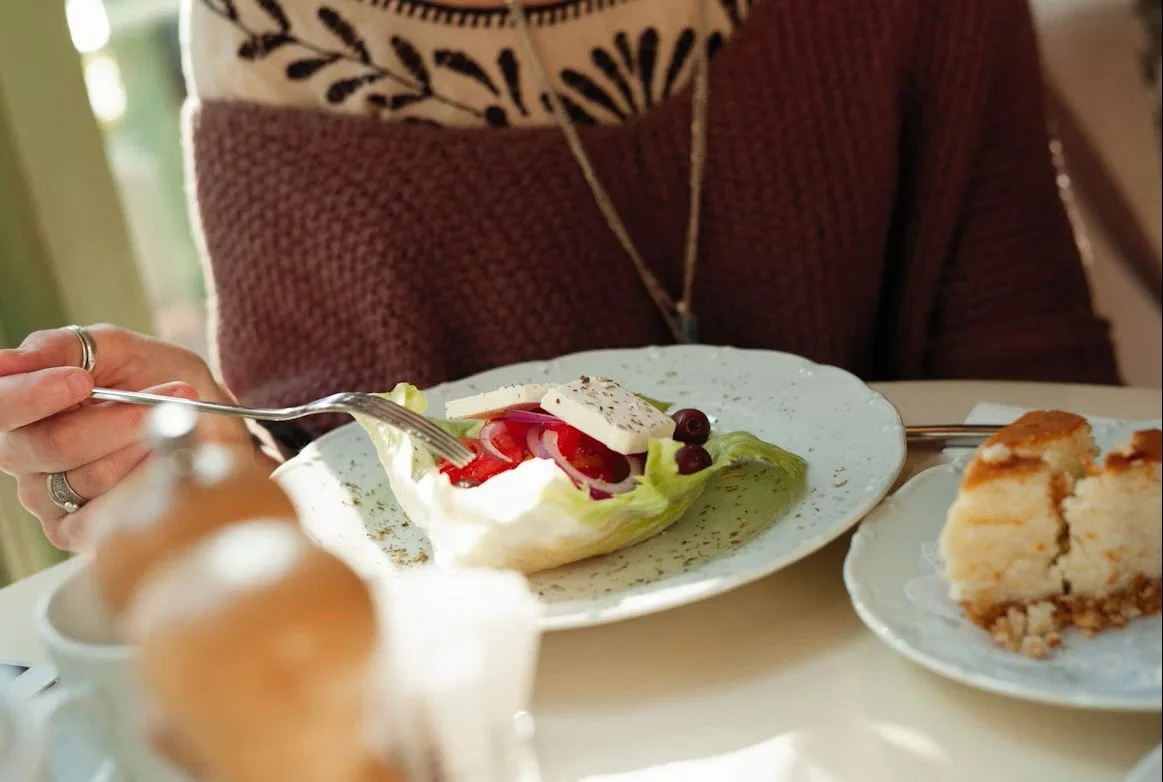
A hundred grams of broccoli does not neutralise two pieces of chocolate cake. Everyone doing this bargain with themselves knows that. But we do it because it makes the guilt smaller.
Anyone who's been through a heavily restricted period with food sensitivities knows how bleak it can feel. I went through a stretch of eating around forty things total, including drinks, spices, proteins, carbohydrates, everything. It was extremely challenging and took all fun out of eating.
Recovery, when it happens, tends to bring most foods back into reach eventually, but with an ongoing need for a bit of care so treats stay treats rather than becoming the default. And sometimes even that is hard. There'll be a moment of too much chocolate, or wine, or anything else you crave at the time. And when that happens, it's easy to fall into the same familiar bargain: having eaten something you "shouldn't" have, you compensate by eating extra healthy afterwards, as if it’s a mathematical equation to solve.
Choosing the healthy option isn't always straightforward, and it's tempting to treat every slip as evidence you're failing. If you beat yourself up too much for not having done enough, the pressure builds into negative self talk. I haven't done enough. I can't motivate myself. I might as well not bother. Before you know it, you're in a negative spiral, and beating yourself up rarely actually helps you keep going.
The alternative isn't complicated, though it can take a while to actually practise it: notice what you did do, rather than what you didn't. The treat that stayed a treat most of the week. The vegetables added to a meal, a salad instead of a sandwich. Building a picture of yourself as someone who's managing this, rather than someone who constantly falls short of a stricter, more disciplined version of yourself, can help enormously. Feeling good about the effort you made tends to make you want to make more of it. Feeling bad about the effort you didn't make tends to make you want to make less.
The same pattern shows up with exercise
It's not just food - at least not for me. Choosing to excercise regularly runs into the same resistance, and the same trap of measuring against an ideal you were never going to meet anyway.
In your fifties, fitness starts declining in a noticeable way. Bone density becomes a real, practical concern for women in particular. If you've watched the women in your own family struggle with musculoskeletal problems from their sixties onwards, the way I have, you start to wonder what you can do to change the course. Weight-bearing exercise isn't just a nice idea for bone health, it's measurable. According to the International Osteoporosis Foundation, moderate to high intensity weight-bearing activity, like brisk walking, jogging, or resistance training, can increase bone density by 1 to 4% a year in both pre and postmenopausal women.
For me, that's meant adding in twenty minutes on a Peloton bike a few times a week, and more recently, pickleball. I love pickleball once I'm there, the competitiveness, the people, the fact that it's not me alone on a machine. But before every session, I have to talk myself into going. Once I'm playing, I notice how much less fit I am than people who are visibly older than me on the court. That's uncomfortable, and it's exactly the kind of noticing that can tip into the same spiral as the chocolate cake bargain: I'm not fit enough, I haven't done enough, why bother trying to catch up now.
I know I'm never going to become someone who exercises for an hour, four times a week, and I've stopped pretending otherwise. So instead I notice that I showed up. That's not a consolation prize. It's the thing that actually keeps the whole habit alive.
What actually keeps you going
In my view, it’s not about getting the diet or exercise "right." It's about noticing the effort that's actually being made, instead of measuring against some other version of yourself who never overdoes it with wine or chocolate and never skips a workout. That’s reality for most of us.
Read my article 'How I decide what's worth the risk' for more thoughts on deciding whether a slip is worth it.
I've created a system that supports both the practical side and the emotional side of figuring this out. You can find out more here: The Food Sensitivities Support System
Or start with my free Food Sensitivities Starter Guide.
About the Author
Nurture & Thrive is written from lived experience of managing multiple food sensitivities over more than 15 years. The content reflects personal experience of navigating symptoms, diagnosis, and recovery, and is focused on the practical and emotional realities of living with it day to day.